A land lease on Siargao costs between ₱10 and ₱80 per square meter per year, depending on location. For a 200 sqm lot in a mid-range area, that's roughly ₱8,000 to ₱12,000 per month. Not bad for beachfront living on a tropical island.
But the price per square meter is only half the story. The contract terms matter just as much, sometimes more. Get the wrong lease structure and you could lose your entire building when the term expires. Get it right and you'll have decades of secure, affordable access to land you could never legally own.
This guide covers actual lease rates across Siargao's eight main areas, the legal framework, real contract pitfalls, and a first-hand case study from a German expat who signed his lease in November 2025.
Disclaimer: This is not legal advice. Always consult a Philippine attorney before signing any land lease. Laws and enforcement vary, and your situation may require a different approach.
Why Foreigners Lease Land on Siargao
Article XII, Section 7 of the 1987 Philippine Constitution is direct: foreigners cannot own land in the Philippines. Period. This isn't a regulation that might change next year. It's a constitutional provision that would require a national plebiscite to amend.
So if you want to build a villa on Siargao, you have two main paths:
- Long-term land lease from a Filipino landowner
- 60/40 Philippine corporation where the company (majority Filipino-owned) buys the land
Most foreigners on Siargao choose the lease route. It's simpler, cheaper to set up, and doesn't require finding Filipino business partners or maintaining corporate filings. For a deeper comparison of both options, read our foreigner land ownership guide.
Land Lease Rates Across Siargao (2026)
Lease rates vary significantly by area. Cloud 9 commands premium prices because of its proximity to the famous surf break and established tourist infrastructure. More rural barangays like Dapa and Tawin-Tawin offer much lower rates, though with less rental income potential.
Here's the full breakdown by location:
| Location | Min (per sqm/yr) | Avg (per sqm/yr) | Max (per sqm/yr) | 200 sqm at Avg/month |
|---|---|---|---|---|
| Cloud 9 | ₱50 | ₱65 | ₱80 | ₱1,083 |
| General Luna | ₱40 | ₱55 | ₱70 | ₱917 |
| Tourism Road | ₱30 | ₱45 | ₱60 | ₱750 |
| Santa Fe | ₱25 | ₱40 | ₱55 | ₱667 |
| Pacifico | ₱20 | ₱35 | ₱50 | ₱583 |
| Libertad | ₱20 | ₱30 | ₱45 | ₱500 |
| Tawin-Tawin | ₱15 | ₱25 | ₱40 | ₱417 |
| Dapa | ₱10 | ₱20 | ₱30 | ₱333 |
These are annual rates per square meter. The "200 sqm at Avg/month" column shows what you'd pay monthly for a typical small lot at the average rate. Beachfront properties tend to land at or above the max, while lots set back from the coast often fall closer to the minimum.
For a detailed look at what land actually costs to buy (through a corporation), see our land prices guide. And if you're still deciding where to build, our best areas to build on Siargao article compares all locations.
The Legal Framework for Foreign Leases
Under the Investors' Lease Act (Republic Act 7652), foreign investors can lease private land for up to 50 years, renewable once for 25 years. That gives a maximum of 75 years of legal tenure.
Here's what matters in practice:
Registration Is Everything
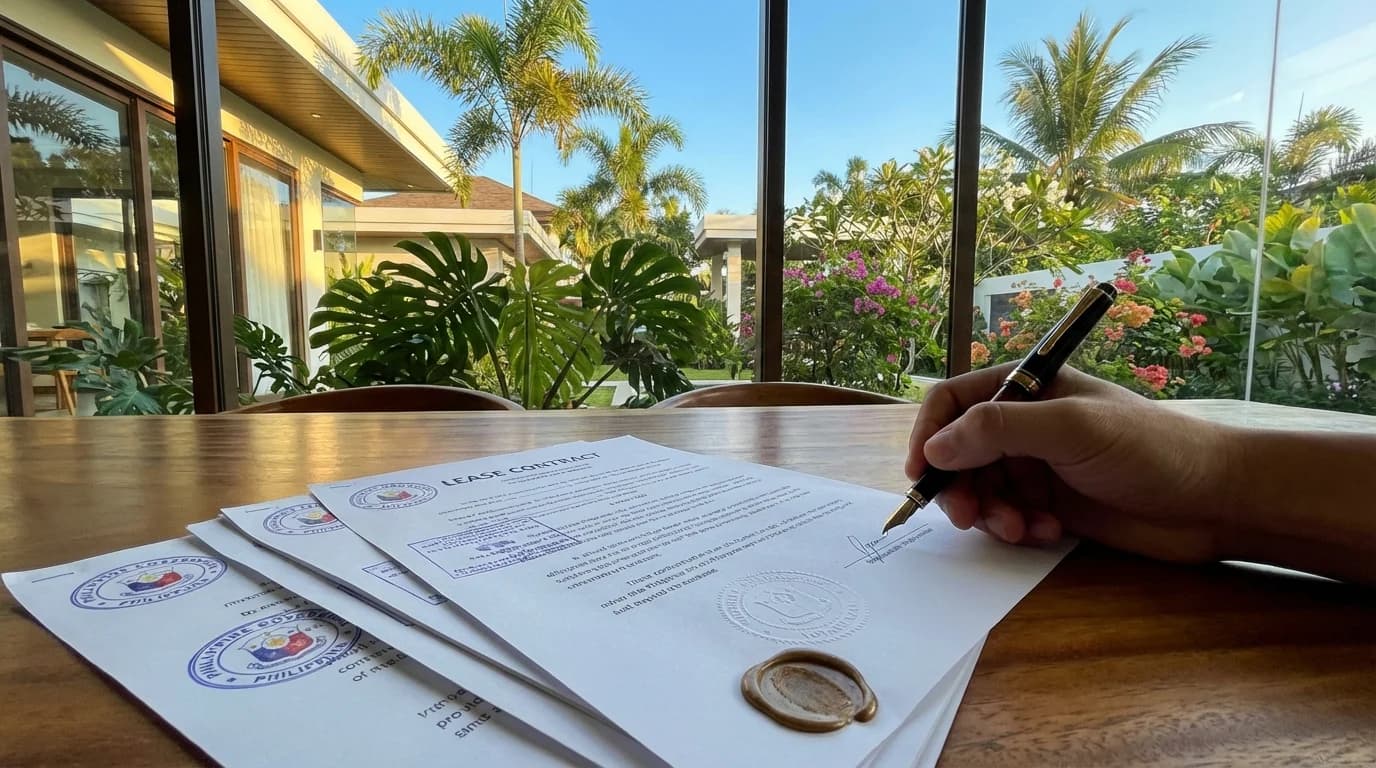
Your lease must be registered with the Registry of Deeds and annotated on the land title (Transfer Certificate of Title). An unregistered lease is just a private agreement between you and the landowner. It offers zero protection if the landowner sells the property, dies, or simply denies the lease exists.
Registration costs roughly ₱10,000 to ₱25,000 depending on the lease value and location. It's the best money you'll spend on the entire project.
Building Ownership
Here's one thing many foreigners don't realize: even though you can't own the land, you can own the building on it. Philippine law treats land and structures as separate property. Your lease agreement should explicitly state that the lessee owns all improvements made during the lease term.
Your Filipino Spouse
If you're married to a Filipino citizen, your spouse can be the leaseholder or co-leaseholder. This adds a layer of security, though it also means the lease is technically in their name (or jointly held). Many couples structure it this way while also having a separate agreement about the building ownership.
Daniel's Story: A Real Lease Deal on Siargao
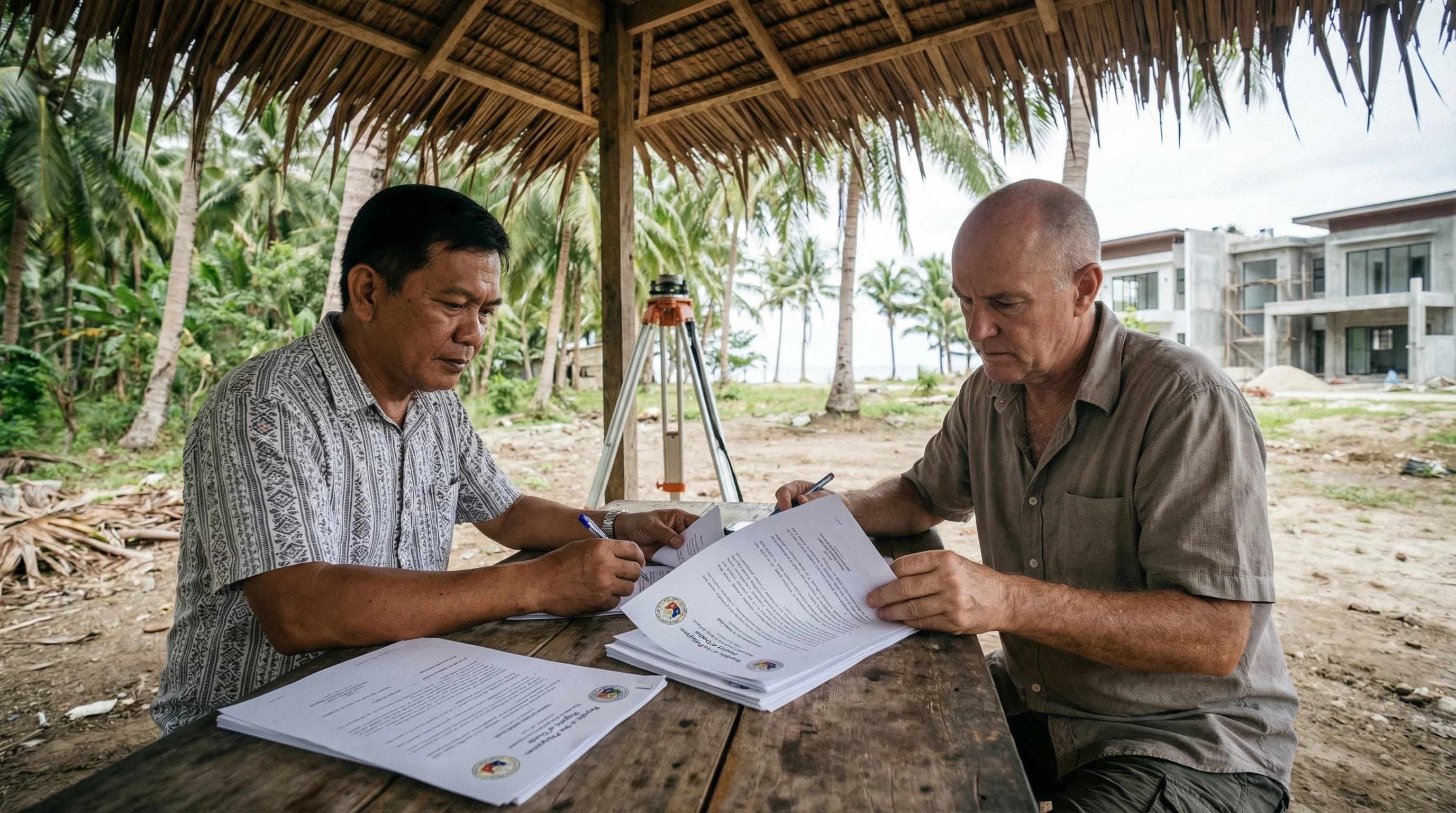
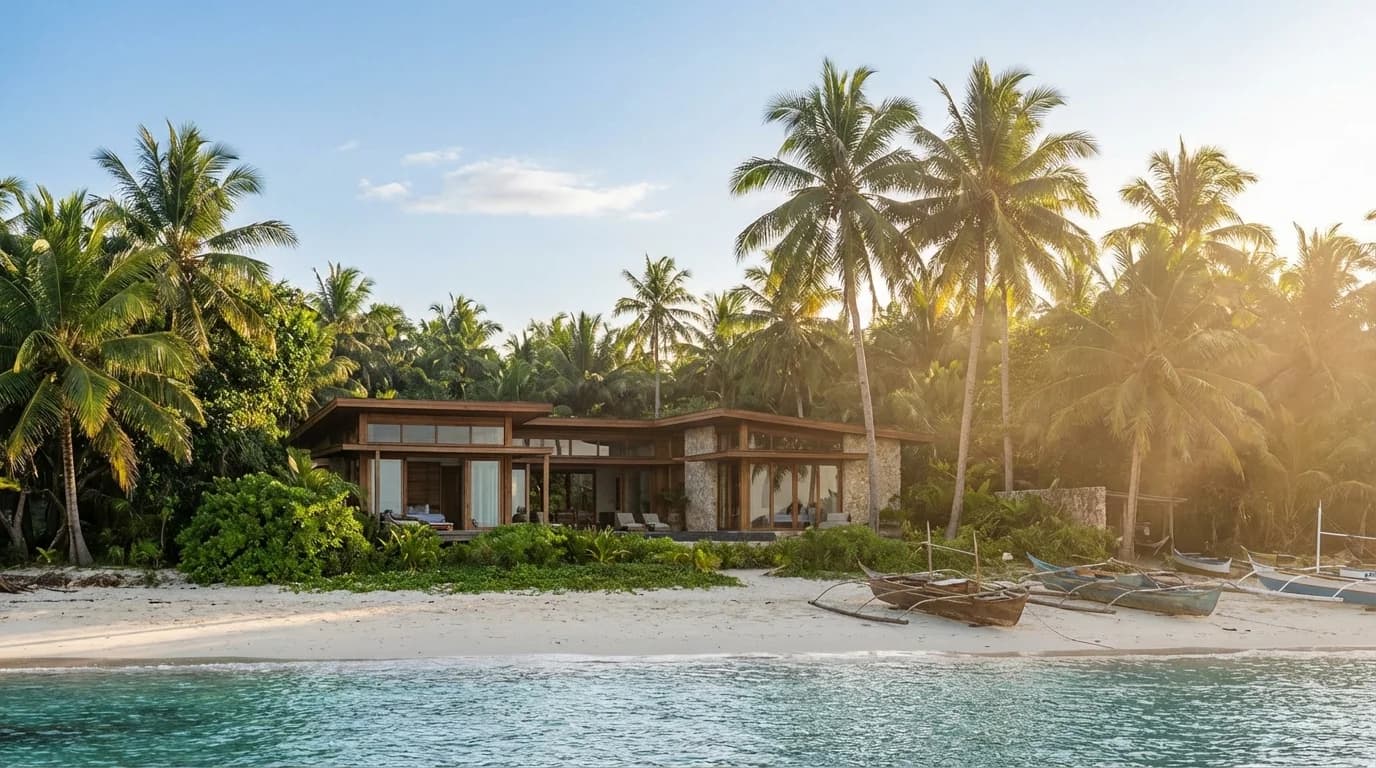
Daniel Kipper, a German expat who met his Filipina wife in 2010 and made the move to the Philippines in 2025, signed his land lease in Malinao, Siargao in November 2025. His experience is a textbook example of how the process actually works, quirks and all.
The Numbers
| Detail | Value |
|---|---|
| Location | Malinao (beachfront) |
| Leased area | 200 sqm + 200 sqm usable shorefront |
| Monthly lease | €300 (~₱20,000) |
| Lease term | 15 years + 15 years extension option |
| Original offer | 10 years (no extension) |
| Geo-engineer survey | ~200 EUR cash, no receipt |
| Lease signed | November 18, 2025 |
Daniel's Filipina wife is officially involved in the lease, as required for foreigner arrangements. She also handled much of the negotiation and communication with the landowner in Filipino. He negotiated the term up from the landowner's initial offer of just 10 years to 15+15 years. That single negotiation could be the difference between keeping and losing his home.
The Geo-Engineer Survey
Before signing, Daniel hired a geo-engineer to survey and measure the lot. Cost: about 200 EUR in cash. No receipt. "Very Philippine," as he put it. The surveyor needed four attempts to complete the job.
This is normal on Siargao. Schedules are flexible, receipts are optional, and patience is mandatory. Budget for the survey, but also budget for it taking longer than you'd expect.
Why He Chose a Lease Over a Corporation
Setting up a 60/40 Philippine corporation costs around ₱250,000 in registration, legal, and accounting fees. Then you need annual corporate filings, a registered office, and at least three Filipino shareholders who hold 60% of the company. For a small beachfront cottage project, the corporate overhead simply didn't make sense.
Daniel's lease at €300/month means he'll pay about €54,000 over the full 15-year initial term. That's still competitive compared to the combined setup costs, annual maintenance fees, and accounting overhead of a 60/40 corporation over the same period.
If you want to reach Daniel directly about his experience, he's open to questions: +63 976 340 3303 or www.tamba-tikki.de.
The Biggest Risk: Short Lease Terms
This is where most foreigners get burned. And it's worth a separate section because the consequences are severe.
Some landowners on Siargao offer lease terms of just 10 years. Sometimes even 5 or 7. The pitch sounds reasonable: "We'll renew when it expires." But here's what actually happens in too many cases: the lease expires, the landowner declines to renew, and they keep the building you paid for.
It's not illegal. If your lease doesn't include a renewal clause, the landowner has no obligation to extend. And if the lease expires, any unremovable improvements (like a concrete villa) typically revert to the landowner under Philippine property law.
What to Negotiate
Your lease contract should include, at minimum:
- Term of 25+ years with a written renewal option for another 25
- Renewal clause that specifies the renewal is at the lessee's option, not the landowner's
- Building ownership clause stating the lessee owns all improvements
- Right to assign or transfer the lease (in case you want to sell)
- Annual escalation cap (3-5% is standard, but negotiate lower if you can)
- Registry of Deeds annotation as a condition of the lease taking effect
Lease vs. Corporation: Quick Comparison
| Land Lease | 60/40 Corporation | |
|---|---|---|
| Setup cost | ₱10K–25K (registration) | ₱250,000+ |
| Annual maintenance | Lease payments only | ₱50K–100K (filings, accounting) |
| Land equity | No | Yes |
| Full foreign control | Limited (lease term) | 40% ownership only |
| Filipino partners needed | No | Yes (60% shareholders) |
| Maximum tenure | 75 years (RA 7652) | Perpetual |
| Complexity | Low | High |
| Best for | Cottages, villas, small projects | Large developments, resorts |
For most individual villa projects on Siargao, a lease is the simpler and cheaper path. The corporation route makes more sense for larger developments, resort projects, or situations where you want to build equity in the land itself. For a full analysis, read our foreigner land ownership guide.
How to Find Land to Lease on Siargao
There's no Siargao MLS or central listing service. Most lease deals happen through:
- Word of mouth. Tell locals, expats, and shop owners what you're looking for. The Siargao expat community is small and well-connected.
- Facebook groups. "Siargao Buy and Sell" and "Siargao Real Estate" groups regularly post available lots.
- Walking the area. If you know which barangay you want, physically walk or ride through it. Many available lots aren't advertised anywhere.
- Fixers and brokers. Local real estate agents and fixers know which landowners are open to leasing. Expect to pay a finder's fee of one month's lease or a small percentage.
Once you find a lot, verify the title at the municipal hall. Check for encumbrances, liens, or multiple claimants. Title fraud isn't common on Siargao, but it does happen, and due diligence costs almost nothing compared to the price of getting it wrong.
What Happens When Your Lease Expires?
This depends entirely on your contract. If you have a renewal clause at the lessee's option, you exercise it and continue. If the renewal is at the landowner's discretion, you're at their mercy.
If the lease ends without renewal:
- Removable improvements (furniture, fixtures, equipment) are yours to take
- Non-removable improvements (concrete buildings, pools, fences) typically stay with the land
- You may negotiate a buy-out of improvements, but you have no legal right to one
This is exactly why lease term length matters so much. A well-drafted 25+25 year lease gives you 50 years of security. Build for that timeline.
Frequently Asked Questions
Can a foreigner hold a land lease in their own name in the Philippines?
Yes. Under the Investors' Lease Act (RA 7652), foreigners can lease private land for up to 50 years, renewable for 25. The lease must be registered with the Registry of Deeds. Many foreigners also involve their Filipino spouse as co-leaseholder for additional security.
How much does it cost to lease land on Siargao?
Annual lease rates range from ₱10/sqm in Dapa to ₱80/sqm in Cloud 9. A 200 sqm lot in General Luna at the average rate costs about ₱11,000 per year (roughly ₱917/month). Beachfront lots command premium rates at the higher end of each range.
What's the minimum lease term I should accept?
We recommend 15 years with a 15-year extension option at minimum. Better is 25+25 years. Never build a permanent structure on a lease shorter than 15 years. If the lease expires and isn't renewed, the landowner can keep your building.
Do I need a lawyer for a land lease on Siargao?
Absolutely. A Philippine attorney should draft or at minimum review your lease contract. Template contracts from landowners almost always favor the lessor. Legal fees run ₱15,000 to ₱30,000, a tiny fraction of your total project cost. Don't skip this step.
Can I sell or transfer my lease to someone else?
Only if your contract includes an assignment or transfer clause. This is something to negotiate upfront. Without it, you're stuck with the lease for its full term, and you can't pass it to a buyer if you decide to sell your villa.
Your Next Step
A land lease is typically the first real commitment in a Siargao build project. Before you sign anything, know what your total project will cost, including construction, infrastructure, permits, and furnishing.
Our free calculator models the full picture: lease costs by location, construction costs by quality tier, and rental income projections. It takes about three minutes, and you'll walk away with a realistic budget before you ever talk to a landowner.
